|
General Information :-
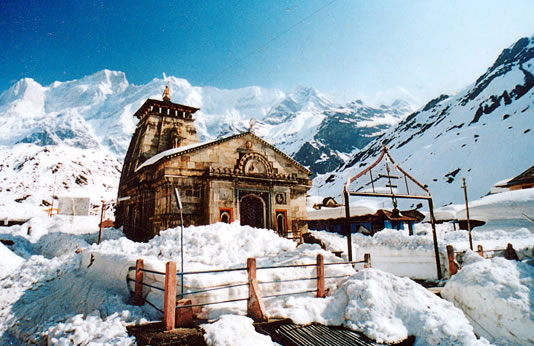
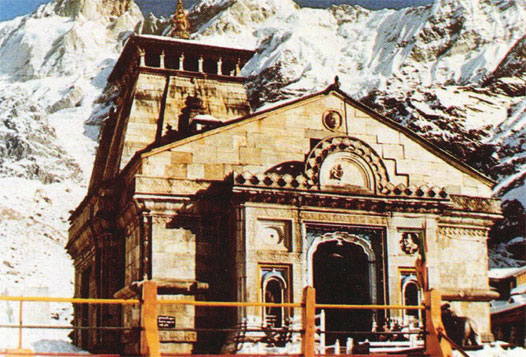
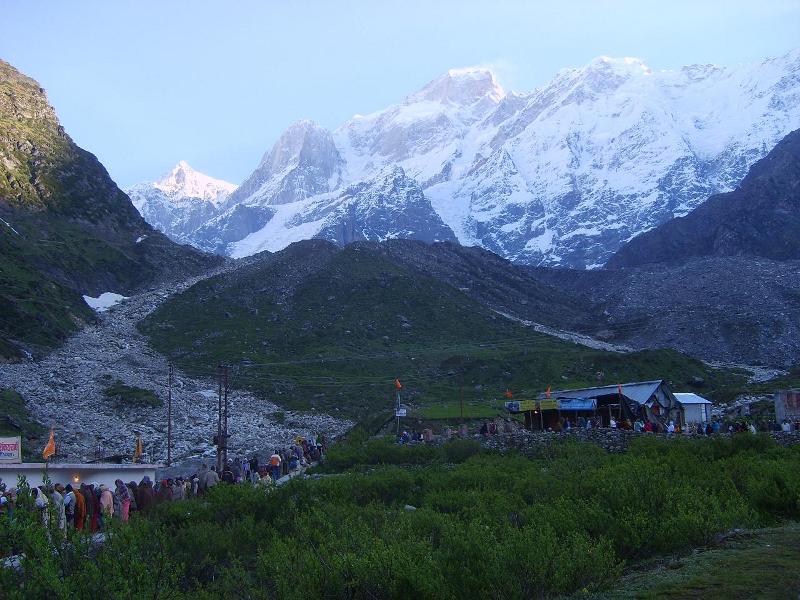
Kedarnath is the most important Hindu shrine in Himalayas, and among the major Shiva temples, of the country. Located at the source of the river Mandakini, Kedarnath is one of the twelve Jyothirlingas, of Lord Shiva, and one of the Panch Kedars. Mythology identifies the deity at Kedarnath temple, with the rump of a bull, a form assumed by Lord Shiva, when eluding the Pandavas, who had come for repentance for killing their kith and kin, in the great battle of Kurukshetra. It is believed that the temple of Kedarnath, was constructed by the Pandavas. At the entrance of the temple, is the statue of Nandi, the divine bull of Shiva. The wall inside the temple, is exquisitely carved with images, and the temple houses a shiva lingam, which is worshipped by hordes of pilgrims. At the approach of winters in the month of November, the holy statue of Lord Shiva, is carried down from Garhwal (Kedarkhand) to Ukhimath, and is reinstated at Kedarnath, in the first week of May. It is at this time, that the doors of the temple are thrown open to pilgrims, who flock from all parts of India, for a holy pilgrimage. Legends notwithstanding, the shrine of Kedarnath is very scenically placed, and is surrounded by lofty, snow - covered mountains, and grassy meadows covering the valleys. Immediately behind the temple, is the high Keadardome peak, which can be sighted from great distances. The sight of the temple and the peak with its perpetual snows is, simply, an enthralling sight.
|