|
General Information :-
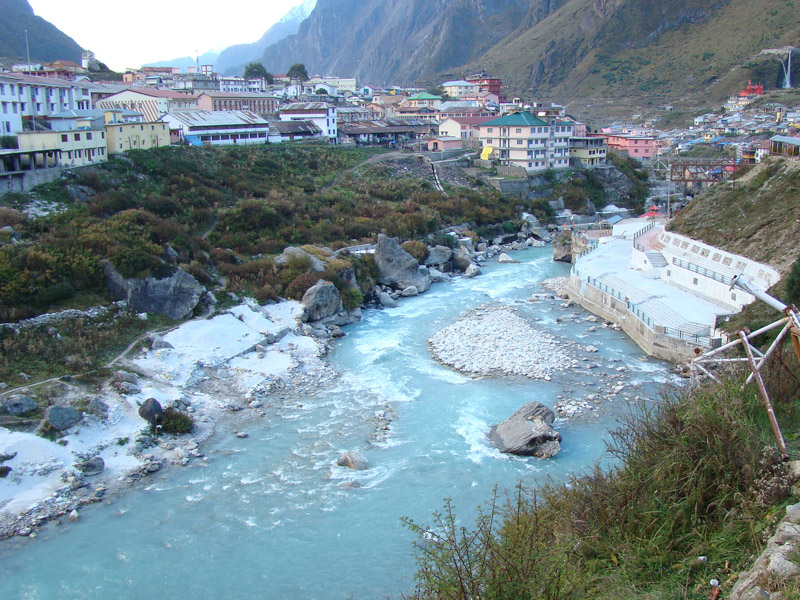
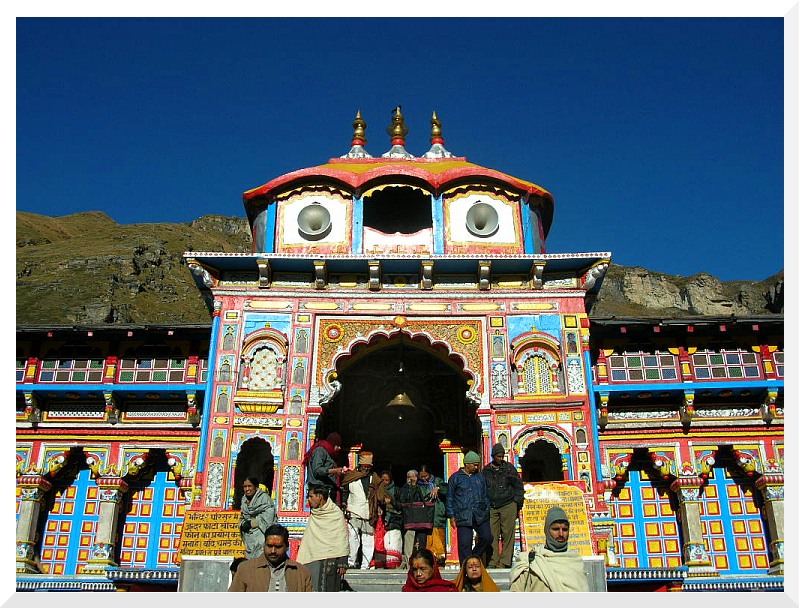
Situated 297 kms from the holy town of Rishikesh and about 600 kms from Delhi, Badrinath lies at an elevation of 3,133 m. Considered to be amongst the most pious of the eternal Hindu shrines of Kedarnath, Badrinath, Gangotri and Yamunotri. Badrinath is located in the lap of Nar-Narayan Parvat, with the Neelkanth peak(6,597m) overlooking in the background. It is to the credit of Adi Guru Shankaracharya, who in order to revive the lost prestige of Hinduism and to unite the country in one bond, built four dhamas or pilgrimage centers in four corners of the country. Badrinath temple, dedicated to Lord Vishnu, is located on the right bank of river Alaknanda, perched at an altitude of over 3000m in the middle of a valley full with scenic beauty. whether someone agrees or not, it has been said that "there were many sacred spots of pilgrimage in heaven, earth and the other world, but neither is any equal to Badrinath nor shall there be one". Even minus this religious claim, Badrinath has some scintillating scenic beauty and rare recreational spots in the vicinity. Indeed, an universal attraction. The present temple was built about two centuries ago by the kings of Garhwal. The principal idol in the temple is of black stone and represents Vishnu seated in a meditative pose, and flanked by Nara-Narayan. Badrinath is also known as Vishal Badri and is one of the Panch Badris. The temple remains closed from October to April due to severe winter conditions. During this period the idols of Utsavo Murti are taken to Pandukeshwar. It is said that "There are many sacred spots of pilgrimage in the heavens, earth and the nether world, but there has been none equal to Badri, nor shall there be".
|